
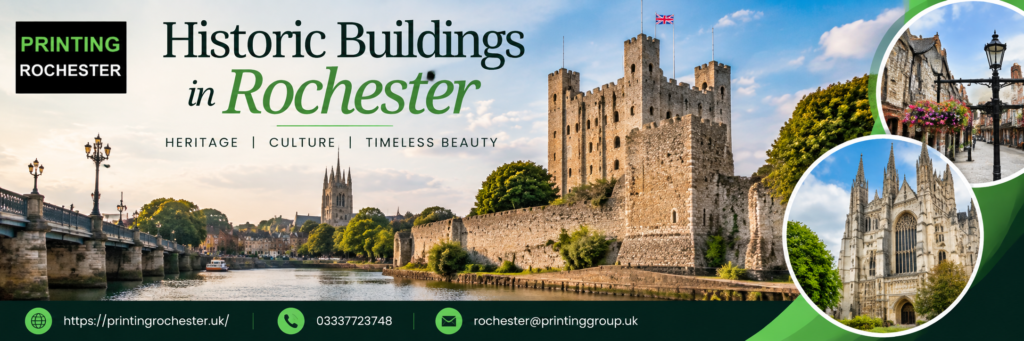
Rochester is one of Kent’s best-known historic places, with centuries of history visible around its streets. Its position beside the River Medway, together with Rochester Castle, Rochester Cathedral and the historic High Street, gives the city a strong connection with its past. These buildings are not simply attractions for visitors. They also form part of everyday life for local residents, shops, cafés, schools, community groups and businesses.
The historic centre brings visitors into Rochester throughout the year, supporting independent businesses and local events. Heritage also affects how organisations present themselves, promote events and provide information to visitors. Maps, programmes, leaflets, posters, signs and other printed materials are commonly used around heritage attractions, exhibitions and community activities.
For printing Rochester, understanding the character of the local area is important. Printing services in Rochester can support businesses, event organisers and community groups with practical materials that fit naturally into the city’s busy visitor and business environment.
Rochester Castle and Its Place in the City
Rochester Castle is one of the most recognisable landmarks in the Medway area. The stone keep dates from the 12th century and stands close to the River Medway and Rochester Cathedral. Its position means visitors can easily include the castle when walking around the historic centre.
The castle grounds are also an important open space in central Rochester. Local events and seasonal activities can bring additional people into the area, which can also benefit businesses around the High Street. Cafés, restaurants, independent shops and other local services often serve both residents and people visiting Rochester for the day.
Events connected with historic locations often need clear information. Flyer printing and leaflet printing can be useful for programmes, visitor information and event schedules, while poster printing can help advertise activities around the city. Larger outdoor events may also use banner printing and other large format printing for directions, entrances and information points.
Rochester Cathedral and the Historic Centre
Rochester Cathedral stands beside the castle and is another major part of the city’s identity. The cathedral traces its history back to AD 604, making it one of England’s oldest cathedrals. The present building contains architecture from different periods, showing how the site developed over many centuries.
The cathedral continues to operate as a place of worship while also welcoming visitors. Its central location makes it easy to reach from Rochester High Street and Rochester railway station. This helps connect Rochester’s heritage attractions with its shops and local businesses.
Historic and religious buildings also show why printed information remains useful. Visitors may need guides, programmes, maps or information about events. Brochure printing and booklet printing are practical choices when more detailed information needs to be presented clearly. Posters and leaflets can also support concerts, exhibitions, talks and community activities.
Eastgate House and Rochester’s Dickens Connection
Eastgate House on Rochester High Street adds another layer to the city’s architectural history. The building dates from the late 16th century and is closely associated with Rochester’s heritage. It is also linked with Charles Dickens, whose connections with Rochester and the wider Medway area remain an important part of the local visitor experience.
Dickens knew Rochester well and used places in and around the city as inspiration in his writing. Today, that connection continues through local attractions and events, including the Dickens festivals held in Rochester.
For local businesses, these events create opportunities to reach additional visitors. Restaurants may update menus, shops may prepare promotional materials and organisations may need event programmes or information sheets. Business card printing can help independent traders and exhibitors make useful contacts, while flyers and posters can communicate event information quickly.
Same day printing can also be useful when an event organiser needs replacement signs, extra programmes or updated information at short notice.
Rochester High Street and Its Historic Character
A walk along Rochester High Street shows that the city’s history is not limited to a few major landmarks. Historic buildings sit alongside independent shops, cafés, restaurants, galleries and other businesses, creating a town centre where heritage and everyday commercial activity are closely connected.
The Guildhall is one of the notable historic buildings on the High Street. Built in the 17th century, it now houses the Guildhall Museum, which tells parts of the story of Rochester and the Medway area. Nearby streets and buildings add to the historic setting experienced by people walking between the railway station, High Street, cathedral and castle.
This environment supports many small businesses that depend on clear communication with customers. Menus, window posters, opening-hours notices, business cards and promotional leaflets all have practical uses. Shops taking part in local events may also use temporary banners or printed displays to help visitors find them.
Businesses with staff working at public events can use T-shirt printing or workwear printing to make team members easier to identify. The aim is practical rather than decorative, particularly when an event attracts visitors who may not know the area.
Historic Rochester, Events and Local Business
Rochester’s historic setting plays an important part in the local economy. Visitors coming to see the castle, cathedral, museums and High Street also use local cafés, restaurants, shops and other services. Rochester railway station provides connections towards London and other parts of Kent, while road links across Medway make the centre accessible from nearby Strood, Chatham, Gillingham and surrounding communities.
The city also has a busy calendar of events. Rochester’s Dickens celebrations and seasonal events bring activity to the historic centre and give local organisations opportunities to take part.
Printed materials can support these occasions in simple ways. Event organisers may need programmes and booklets, businesses may use posters and leaflets, and stallholders may require banners or signs. Community organisations can also use printed information to explain their work and tell people how to get involved.
Local printing therefore connects naturally with Rochester’s events and visitor economy. The important point is to produce materials that are easy to read, suitable for their purpose and available when organisations actually need them.
Protecting Rochester’s History While Supporting Modern Life
Historic buildings need care, but they also need to remain part of modern community life. Rochester provides a good example of how old buildings can continue to serve different purposes while keeping the history of the city visible.
Residents use the same High Street that visitors explore. Businesses operate close to major heritage sites, while community groups, schools and organisations use local venues for activities throughout the year. This creates a balance between protecting the past and meeting the needs of a working city.
Printing services have a small but useful role within this environment. Clear visitor guides can explain local history, posters can promote exhibitions, brochures can provide detailed information and signs can help people move around events. Local businesses can also use business cards, menus and other everyday materials without losing sight of Rochester’s individual character.
Conclusion
Rochester’s historic buildings help explain why the city remains such a distinctive part of Medway. Rochester Castle and Rochester Cathedral dominate the historic centre, while Eastgate House, the Guildhall and buildings along the High Street provide further links with different periods of local history.
These places also support present-day Rochester. They attract visitors, provide settings for events and help bring people to local shops, cafés, restaurants and organisations. Good transport connections make the historic centre accessible from elsewhere in Medway, Kent and London.
For businesses and community organisations, printing can support this activity through practical materials such as leaflets, posters, brochures, programmes, banners and signs. Whether promoting an event, helping visitors find their way or providing information about a local organisation, useful printed material continues to have a place alongside Rochester’s historic streets and buildings.